It will never not be exciting to see our design work come to life.
It's one of the things we love most about working in construction: watching an idea move from drawings and specifications into something tangible, functional, and useful.
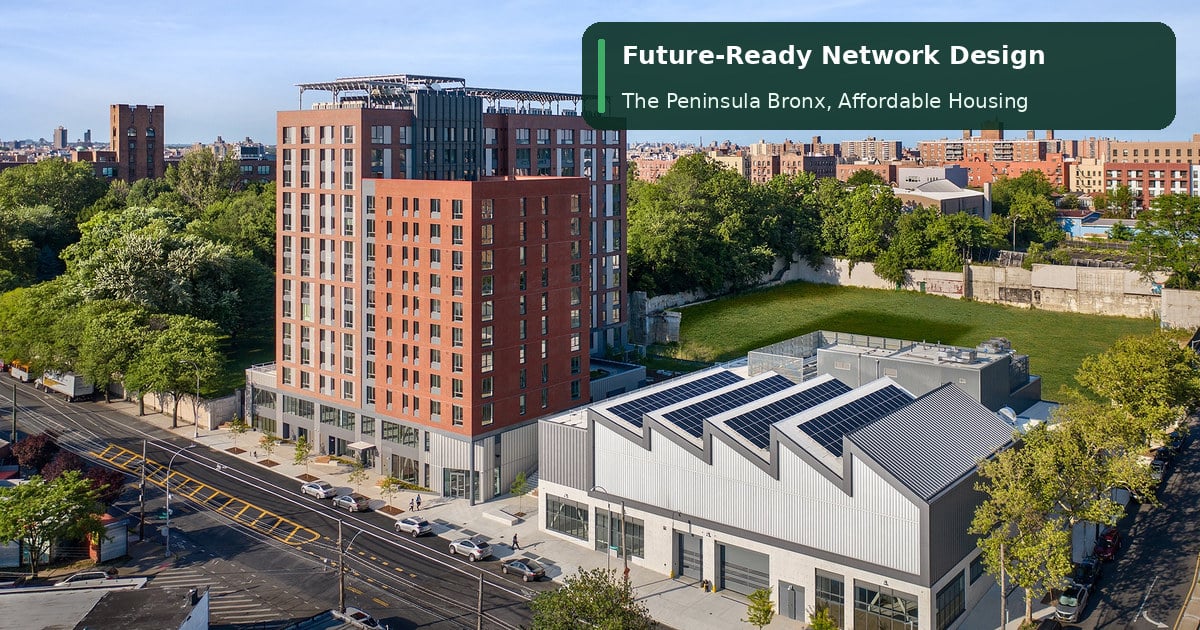
Recently, our Senior TechGC, Lou Scavelli, walked through Tower 2A at The Peninsula, a major affordable housing and mixed-use development in the Bronx, where Techmenity designed the building's Digital Foundation™ (aka connectivity infrastructure)
And it was pretty cool to see how it's all coming together.
Building for today. Planning for what's next.
In New York City, broadband is increasingly treated as an essential utility, not an optional amenity. Under NYC HPD's Broadband Guidelines, applicable affordable housing developments must provide internet service at no additional cost to residents, with at least 100 Mbps upload and download per apartment, secure household access, and WiFi in common areas.
HPD also calls for building-owned network infrastructure and accessible cabling pathways that can accommodate future expansion.
Techmenity was brought into The Peninsula by EP Engineering to design the Digital Foundation™ that would support those connectivity requirements while accommodating multiple internet service providers.
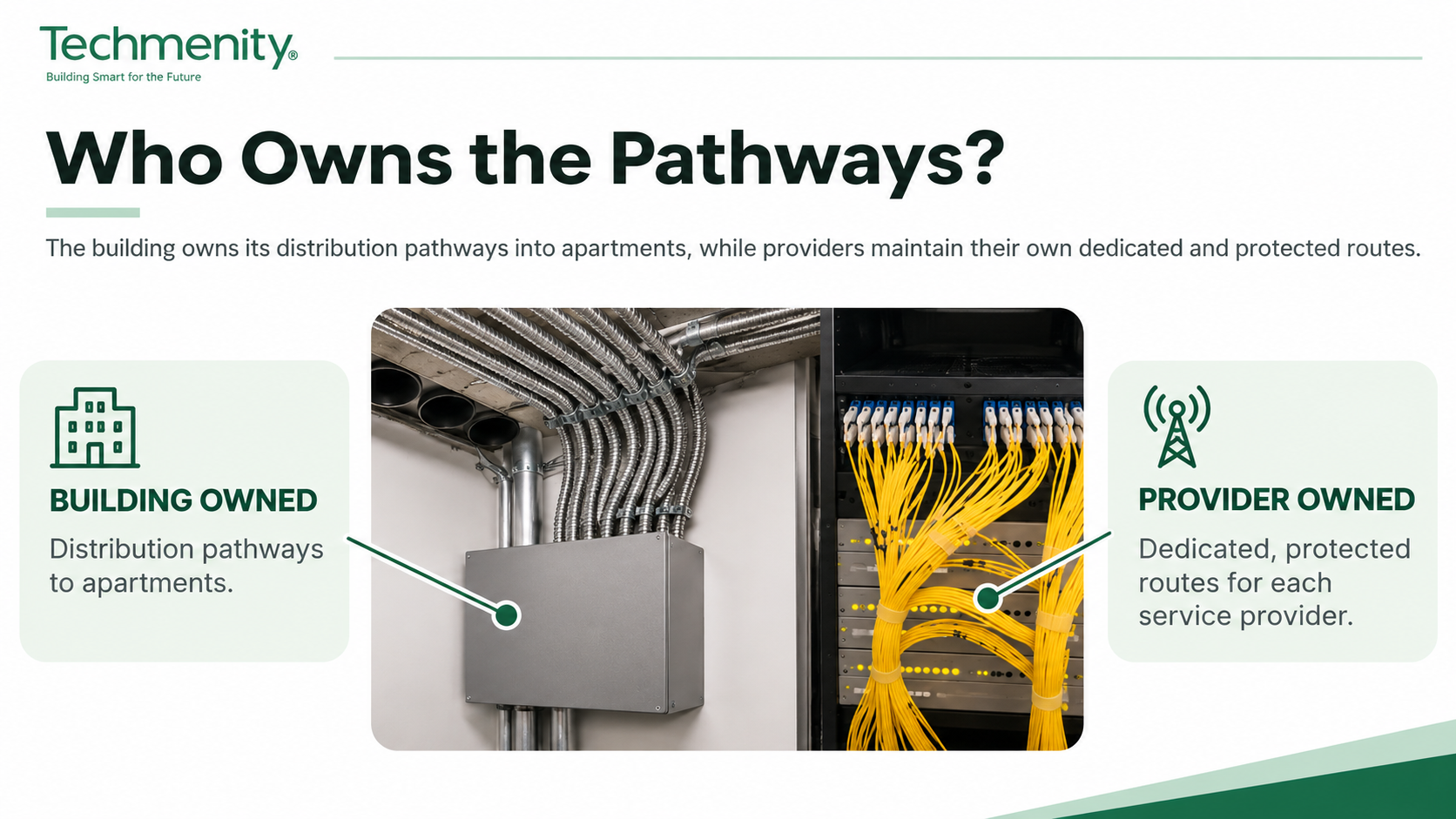
We designed a network of vertical risers and intermediate distribution closets (IDFs) every three floors, with dedicated pathways carrying fiber and other service cables to individual apartments. Each closet serves its own floor plus the floors immediately above and below, allowing providers to distribute service efficiently throughout the tower.


The building owns its own distribution pathways into apartments, giving ownership flexibility to modify or upgrade infrastructure over time. Internet providers maintain their own dedicated, protected pathways for delivering and servicing their networks.
At The Peninsula, Spot On provides the building's managed WiFi, allowing connectivity to be available to residents from move-in without requiring individual service installations.
We also planned for a potential change in ownership. The two towers share one main distribution facility today, but we designed additional conduit from the street so the second tower could establish its own independent MDF if the buildings are ever sold separately.
Value engineering without losing the vision.
Of course, designs rarely make it through construction without a few adjustments.
Our original specification called for molded plastic distribution components to organize and protect the cabling pathways. During value engineering, the construction team substituted a less expensive flexible metallic conduit solution.
Different materials. Same fundamental distribution strategy.
And that's an important distinction.
Future-ready design doesn't necessarily mean using the most expensive solution. It means knowing which elements need to be preserved to protect the long-term vision.
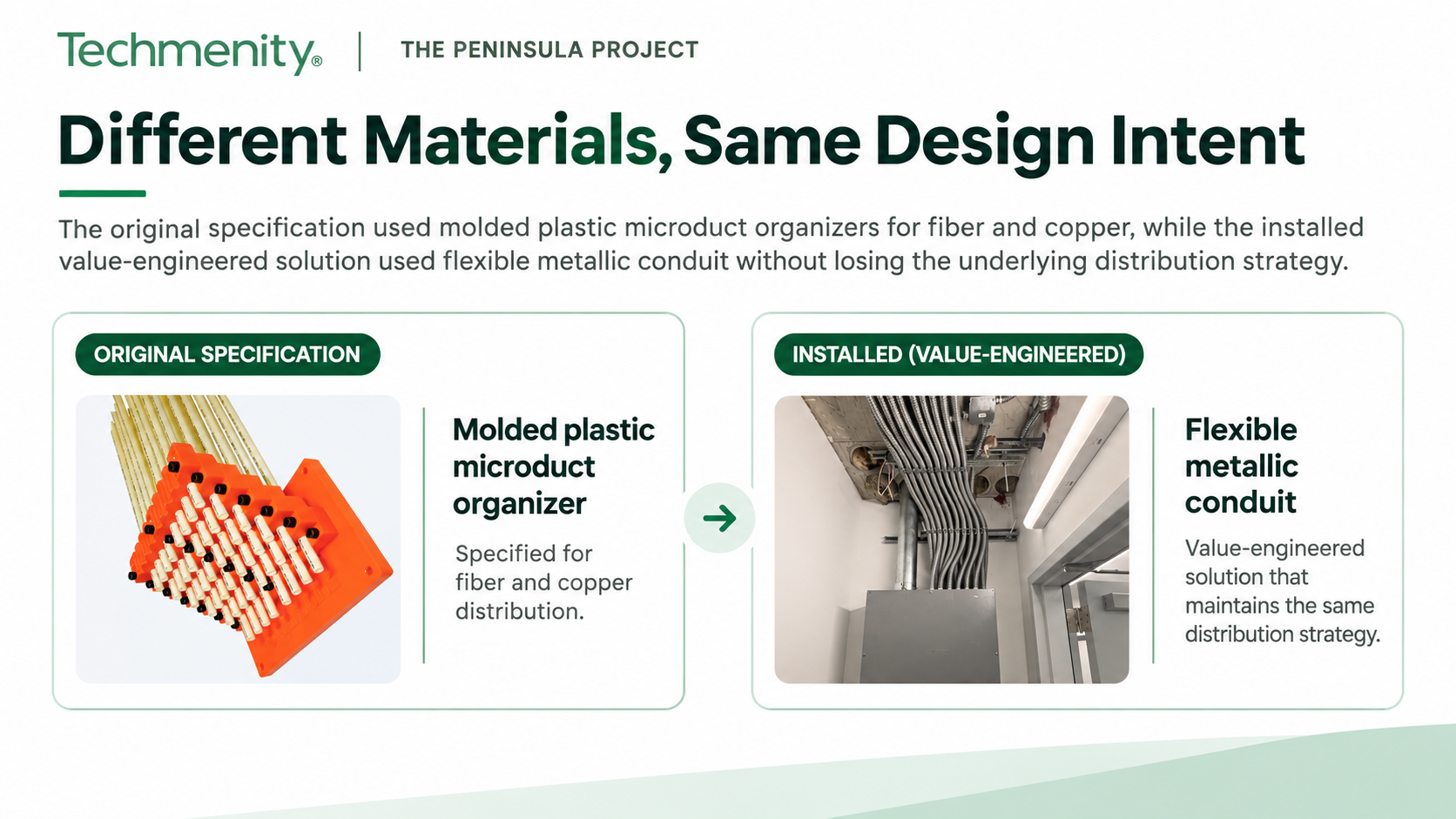
The infrastructure we saw on site still provides dedicated pathways and substantial capacity for additional providers.
The building is still under construction, but our October network assessment confirmed functioning connectivity and strong performance at several tested locations. Additional testing, installation corrections, and final acceptance are still ahead.
Design intent meets construction reality.
We also got a look at the main distribution room in the basement, where multiple providers and contractors have been installing their equipment.
Let's just say there's still some housekeeping to do.
Some of the equipment installation and cable organization needs attention, and not every vendor has taken full advantage of the separate pathways that were designed for them.
But construction isn't finished, and there's still an opportunity to address those details before final turnover.
It's also a reminder of why our Technology General Contractor (TechGC) model includes more than design. Even with well-planned infrastructure, coordinating the different trades and vendors during implementation is essential to protecting the intended result.
We were originally engaged for infrastructure design, not construction administration or oversight of the technology installation. We were later brought back under a separate engagement to assess the installed systems against our original design intent.
The real value is what the building can do next.
The Peninsula is a great example of how thoughtful technology planning can support both the immediate needs of a building and the people who will live there for years to come.
That's the idea behind the Digital Foundation™: infrastructure that supports today's systems with an eye towards tomorrow's possibilities.
Seeing that vision become reality is a pretty satisfying part of the job.
And we're looking forward to seeing the finished result.
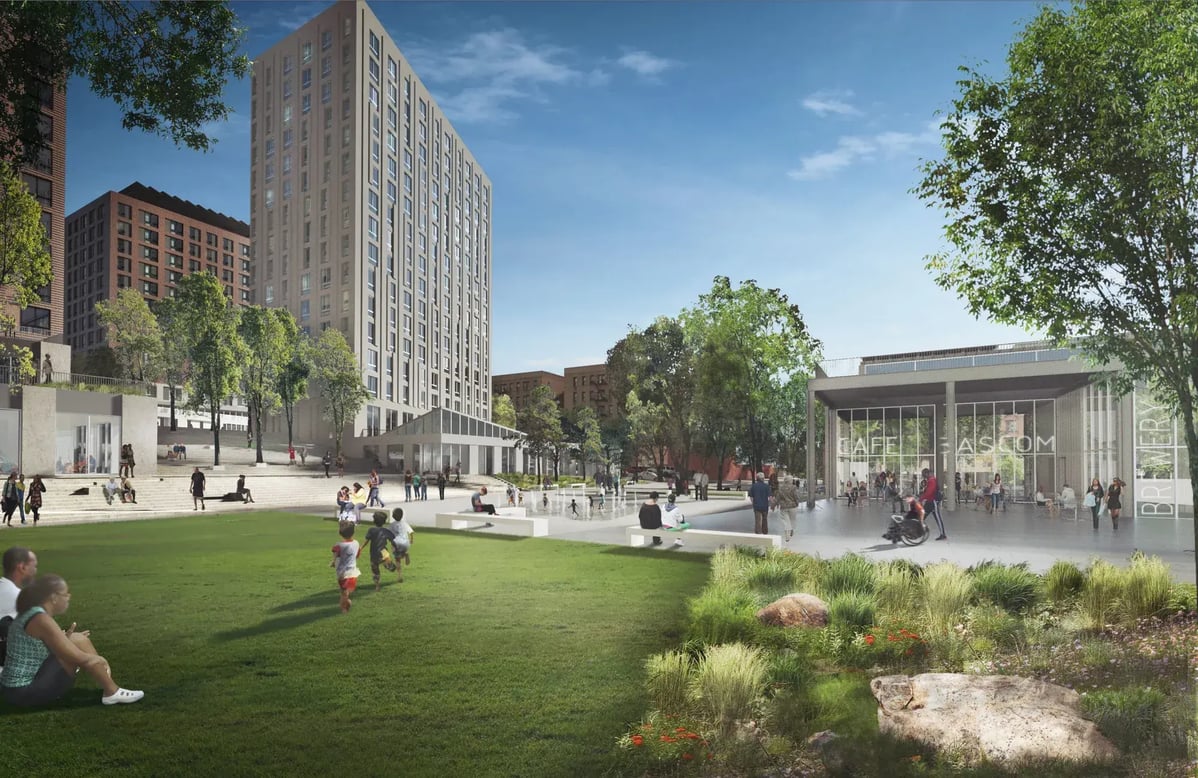
Project Rendering